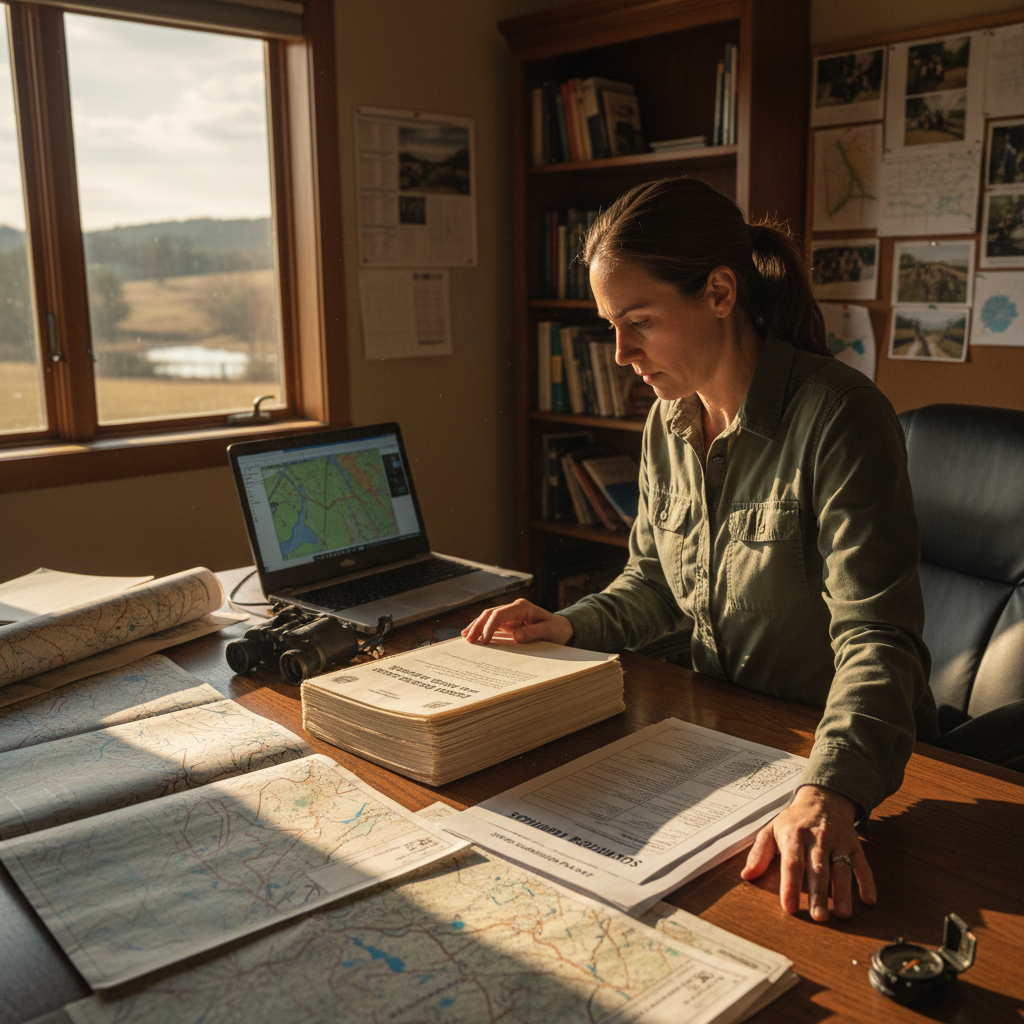
Section 106 of the National Historic Preservation Act puts the burden of compliance squarely on federal agencies and their contractors. For a CRM firm, that burden lands on project managers — not field crews. Crews can record an excellent site form and still produce a deficient Section 106 report if the PM hasn't set up consultation, agency coordination, and deliverables correctly.
This is a working checklist of what a PM is actually responsible for under Section 106, organized in the order the work tends to happen.
1. Confirm the regulatory frame before kickoff
Before scoping fieldwork, confirm:
- Which agency is the lead federal agency. This is who you ultimately answer to. It is not always the funding agency.
- Whether a Programmatic Agreement (PA) governs the project. PAs supersede default Section 106 procedures and can dramatically change consultation and reporting requirements.
- Whether a state-level MOA or PA applies. Some states (CA, NV) have streamlined procedures for routine actions.
- The Area of Potential Effect (APE). Defined by the lead agency, in consultation with SHPO. If the APE is fuzzy, your report will be too.
2. Run the consultation work the regs actually require
Section 106 is a consultation statute, not just a documentation statute. PMs miss this regularly.
- SHPO/THPO consultation initiation. Must come from the lead federal agency, not the contractor. PMs commonly draft the agency's consultation letter and confirm transmission.
- Tribal consultation. Identify all tribes with potential interest. The list is not just THPOs — it includes tribes whose ancestral territory overlaps the project area.
- Other consulting parties. Local historic societies, descendant communities, NRHP-listed property owners. Identify them early.
- Document every consultation contact. Date, method, parties, content, response. This is one of the most-cited deficiencies in agency review.
A defensible consultation log is one of the highest-leverage things a PM can produce. It does not write itself.
3. Background research deliverables
What the SHPO expects in the records search section of your report:
- Previously recorded sites within and adjacent to the APE
- Previous archaeological surveys covering or adjacent to the APE
- NRHP-listed and -eligible properties within the APE
- Historical maps, GLO records, aerial imagery
- Cultural and environmental context sufficient to evaluate site sensitivity
Most of this is contractor work, but the PM is responsible for confirming the records search request was filed correctly and the response was complete. SHPOs return reports for incomplete records searches.
4. Methods that match the agency's expectations
PMs commonly inherit methods from the proposal. That's a mistake. Confirm methods against:
- The lead agency's most recent guidance, not what was current when the proposal was written
- Any MOA, PA, or state-specific protocol that supersedes default methods
- The SHPO's published expectations (most have these on their website)
If the methods in your fieldwork plan don't match the methods the reviewing agency wants to see, you are buying a revision.
5. Field deliverables PMs own (not crews)
Field crews own data. PMs own:
- Site eligibility recommendations. Each recorded resource needs a clear NRHP eligibility determination and a defensible rationale tied to the evaluation criteria. "Not eligible" with no justification is the second most-cited deficiency.
- Effects findings. No Historic Properties Affected, No Adverse Effect, or Adverse Effect — with the rationale to support each. This is a regulatory determination, not a field judgment.
- Mitigation recommendations. When Adverse Effect is found, what's the proposed treatment?
6. Report structure that survives review
A Section 106 report that consistently clears review tends to follow this structure:
- Executive summary — agency, project, undertaking, APE, methods, findings, recommendations. Reviewers triage your report from this section.
- Project description — federal action, undertaking, APE rationale.
- Regulatory and legal framework — Section 106, applicable PA/MOA, NEPA integration if relevant.
- Cultural and environmental context — calibrated to the project area.
- Methods — what you did and why.
- Records search results — what was already known.
- Field results — what you found, organized by resource.
- NRHP evaluations — eligibility recommendations with rationale per resource.
- Effects analysis — finding per resource, finding for the undertaking.
- Recommendations — proposed treatment, mitigation, or further work.
- Consultation log — every contact, every response.
- Appendices — site forms, photographs, maps, records search response, qualifications.
If your reports are clearing review without all of these sections, you are getting lucky.
7. SHPO-format deliverables
Each state SHPO has its own form-format requirements. Common pitfalls:
- California (DPR 523): must be the official PDF layout, not a re-typeset version. Coordinates must agree across the form, the location map, and any GIS deliverable.
- Nevada (IMACS): controlled vocabularies must match the published code lists exactly. Free-text in coded fields = rejection.
- Utah (IMACS variant): standard IMACS plus state-specific addenda; trinomial assignment workflow must be documented.
This is one of the highest-leverage places to invest in tooling. FieldTap Report Builder imports your state's official PDF and auto-exports submit-ready records — eliminating the manual transcription that creates most form-format deficiencies. See state-specific guides for California, Nevada, and Utah.
8. Final QA before submission
Before transmission to the lead agency:
- Consistency check. Resource counts, coordinates, and findings consistent across narrative, tables, forms, maps, and GIS.
- Maps legible at submission size. Reviewers print or view at 100%; symbology and labels must work at that scale.
- Photographs labeled and tied to records. If a photo isn't traceable to a resource record, it shouldn't be in the report.
- Consultation log complete. Every contact, every response, every non-response.
- Recommendations actionable. "Further work recommended" is not a recommendation. State the specific work, the specific deliverable, and the regulatory trigger.
What separates a clean Section 106 report from a revision cycle
Reviewers consistently flag the same things:
- Coordinate inconsistency between form, map, and GIS
- Missing or weak NRHP evaluation rationale
- Incomplete or undocumented consultation
- Records search gaps
- Methods that don't match the agency's current guidance
Four of those five are PM-level work, not field-crew work. PMs who systematize these areas — checklists, templates, tooling that prevents drift — turn revision cycles into one-pass approvals.
Related guides
- Phase I Archaeological Survey Workflow Checklist
- Digital Field Recording for CRM Archaeology — Buyer's Guide
- State-specific compliance: California · Nevada · Utah
If you're a PM running multiple Section 106 projects and the form-format and consistency-check problems are eating your week, that's exactly the workflow FieldTap was built for. Start a free 14-day trial.
Ready to put this into practice?
Start a 14-day free trial — no credit card required.
Start free trial