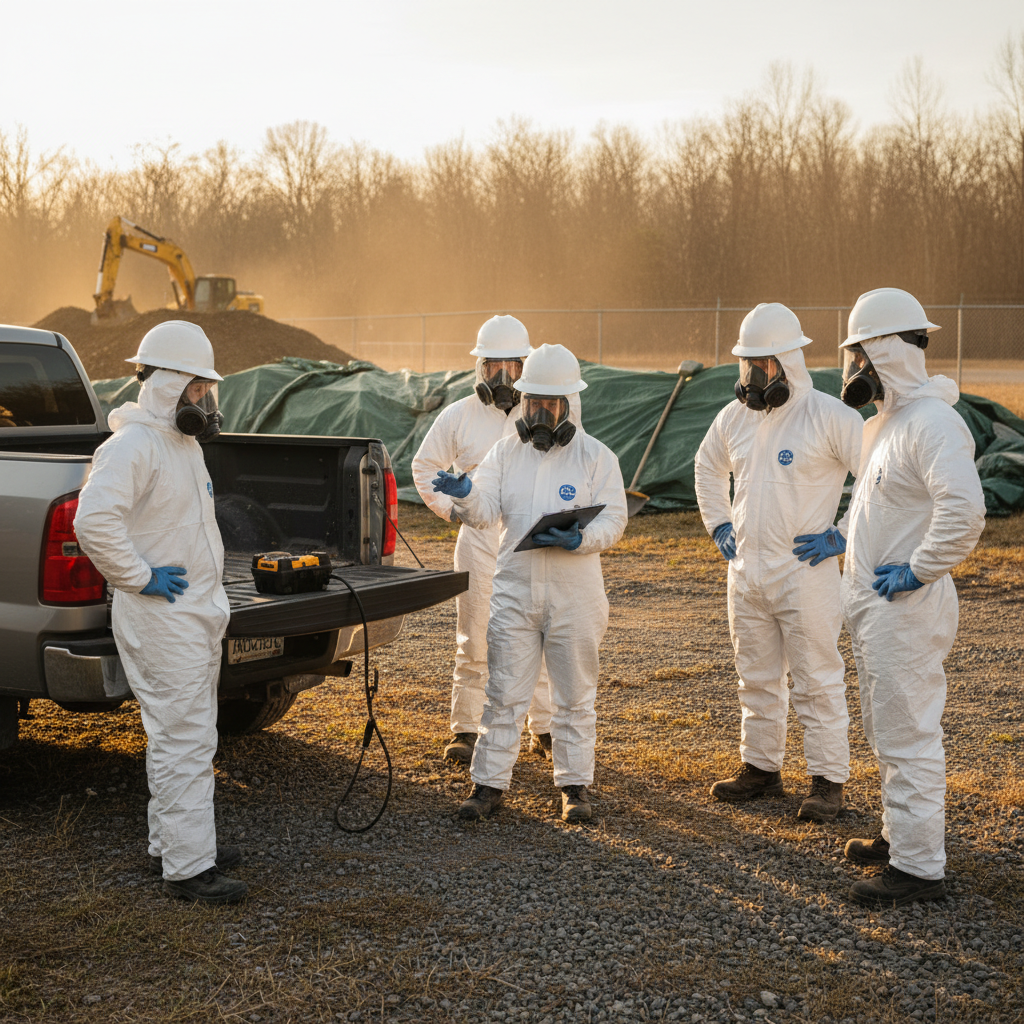
OSHA recordkeeping isn't optional for environmental consulting firms. Phase II site assessments, remediation oversight, and any HAZWOPER-covered work (29 CFR 1910.120) generate documentation requirements that auditors will review with no patience for "we have it somewhere."
This guide is an honest look at what OSHA actually requires for field documentation in environmental consulting work, what the most common gaps are, and how a structured field workflow turns recordkeeping from a tax into a side effect of doing the work right.
What OSHA actually requires
For HAZWOPER-covered work, the major documentation requirements:
- Site-specific Health and Safety Plan (HASP). Written, current, on-site, and known to every worker.
- Daily safety meetings (tailgate / toolbox). Documented, with attendance.
- Exposure monitoring records. Air monitoring data, sampling location, time, instruments used.
- Personal protective equipment (PPE) selection rationale. Why the level of protection chosen is appropriate.
- Decontamination procedures. Documented, demonstrated, and verifiable.
- Medical surveillance. Worker medical clearance documents on file.
- Training records. 40-hour HAZWOPER, 8-hour refresher, supervisor training (8 additional hours).
For non-HAZWOPER environmental work, requirements are lighter but exposure monitoring, training, and incident records still apply if your work involves regulated materials.
What auditors actually look for
In our work with consulting firms that have been audited, the recurring patterns:
- Daily safety meetings without a documented attendance list. "We had the meeting" doesn't survive a citation.
- HASPs that don't reflect what's actually happening on the site. A copy-paste HASP from a previous project, with the wrong site address, is a red flag.
- Air monitoring data with gaps or missing instrument calibration records. Calibration records are often the gap, not the monitoring data itself.
- Workers on site without documented current training. Especially common with rotating subcontractors.
- PPE rationale that's not documented. "We always use Level D" is not a rationale; the HASP needs to explain why.
A defensible daily field documentation workflow
The pattern that survives audits and minimizes administrative load:
Pre-work (start of project)
- HASP written, signed by the project HSO, distributed to every worker
- Site-specific addendum to the firm's emergency response plan
- Subcontractor training and medical surveillance records collected in advance — not chased after the work starts
Daily on-site
- Tailgate safety meeting at start of day, with attendance recorded by name (not initials), topic, hazards discussed, and any changes from the previous day
- Air monitoring instrument calibration logged, with calibration gas lot number and instrument serial
- Site entry/exit log for every worker and visitor
- Real-time exposure monitoring data captured at sampling locations with GPS/area tag
- PPE level changes documented with rationale, signed by the HSO
- Incidents (near-misses count) documented immediately
End of day
- Monitoring data downloaded from instruments and cross-checked against field log entries
- Photos of monitoring locations, decon stations, and any unusual conditions
- HASP review notes (any conditions that warrant a HASP update)
End of project
- Demobilization log
- Final exposure monitoring summary by worker
- Incident log compiled
- Training and medical records retained per OSHA retention rules (30 years for exposure records)
Where digital tools actually help
Paper is fine for a small firm doing one project at a time. The administrative overhead scales nonlinearly past three or four concurrent projects.
A field documentation tool that's useful for OSHA-compliant work needs to:
- Capture daily safety meetings with attendance, GPS, timestamp
- Capture monitoring data with location, instrument serial, calibration record
- Capture entry/exit logs with worker name, time, PPE level
- Tag photographs to specific records (decon station check, air monitoring location, etc.)
- Generate exportable summaries for project closeout
Tools that are purpose-built for environmental field work (like FieldTap's environmental form library) handle this directly. Generic tools can be configured but require template development.
Retention requirements that catch firms off guard
OSHA retention requirements often outlast project filing systems:
- Exposure monitoring records: 30 years
- Medical records: Length of employment + 30 years
- Training records: Current + most recent
- Incident records: 5 years
- HASP: Length of project + post-project records
If your firm's project archive purges after 7 years, you're losing records that OSHA could request 23 years later. Worker exposure records specifically need to live longer than your typical project filing system.
What this looks like in practice
For a 10-person environmental consulting firm running a typical mix of Phase I/II ESAs and remediation oversight:
- HASP template library by activity type (drilling, soil sampling, monitoring well installation, etc.)
- Daily field log template that prompts for tailgate meeting, attendance, monitoring instruments, PPE level, conditions
- Photo tagging by record (decon, monitoring, work area, hazards)
- Monthly QA pass by the firm's HSO that flags any missing daily records before they become an audit issue
Firms that systematize this turn OSHA recordkeeping from a tax into a byproduct of doing the work. Firms that don't tend to discover gaps during audits.
Related guides
- How to Run a Phase I ESA Without Paper Forms
- Digital Field Recording for CRM Archaeology — Buyer's Guide
If you'd like to evaluate FieldTap for environmental field documentation, start a 14-day free trial — no credit card required.
Ready to put this into practice?
Start a 14-day free trial — no credit card required.
Start free trial